Our industrial and systems engineers are combining intelligent automation, direct printing, and real-time monitoring to improve every step of semiconductor manufacturing. That means faster prototyping, less waste, and more flexibility to support advanced technologies like chiplets, flexible electronics, and even electronics built in space.
They are also developing predictive models, anomaly detection systems, and digital twins to help manufacturers fine-tune performance and scale production with confidence.
By taking a practical, forward-looking innovation approach, we’re able to meet the semiconductor industry where it’s going, not just where it’s been.
Research Faculty and Staff

Michael Biehler
Position title: Assistant Professor
Industrial & Systems Engineering
- AI for manufacturing
- 3D/4D printing optimization
- Real-time process control
- Multimodal sensor fusion
- Digital twins & soft sensing
- Cyber-physical system security
- Point cloud learning & defect detection

Dane Morgan
Position title: Harvey D. Spangler Professor of Engineering
Materials Science and Engineering
- Computational materials science for materials design
- Ab initio electronic structure and multiscale methods for large time / length scales and thermokinetics
- Ab initio based modeling of electrochemical systems and processes
- Machine learning techniques for accelerating materials analysis and discovery
- Application areas: Nuclear materials, Battery and fuel cell electrodes, electronic materials
Hantang Qin
Position title: Assistant Professor
Industrial & Systems Engineering
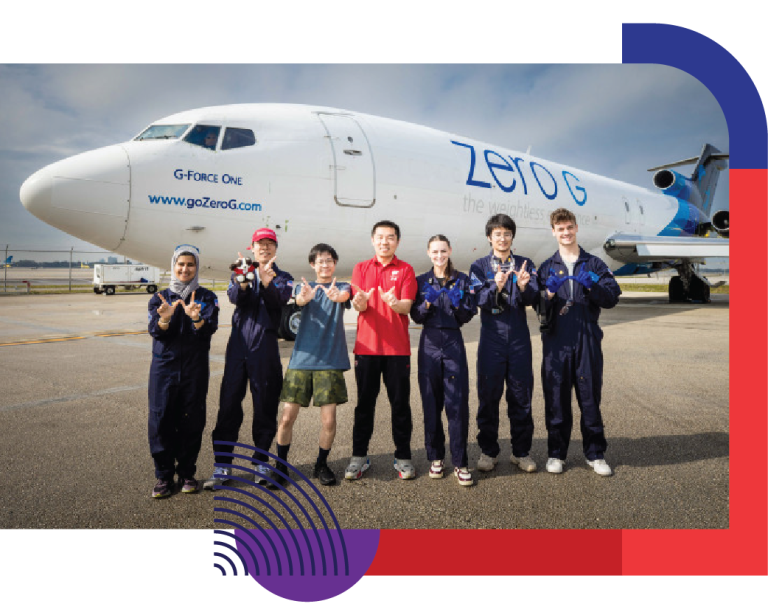
- In-space manufacturing
- Additive manufacturing
- 3D printing
- Micro/nano manufacturing
- Electrohydrodynamic
- In-situ monitoring
- Quality engineering

Robert Radwin
Position title: Duane H. and Dorothy M. Bluemke Professor
Industrial & Systems Engineering
- Occupational ergonomics and biomechanics
- Ergonomics design of manually operated products, hand tools and equipment
- Measurements and methods for assessing exposure to physical stress in the workplace
- Causes and prevention of work related musculoskeletal injuries
- Quantifying functional deficits associated with musculoskeletal and neuromuscular disorders
- Rehabilitation engineering
- Ergonomics of medical instruments, procedures and simulations

Raj Veeramani
Position title: E-Business Professor
Industrial & Systems Engineering
- Industrial data analytics and intelligent decision-making
- Data science and AI-enabled business process improvement and automation
- Internet of Things (IoT)
- Smart manufacturing and connected enterprise
- Supply chain management and optimization
- E-business technologies and strategies
Andi Wang
Position title: Assistant Professor
Industrial & Systems Engineering
-
Monte Carlo methods
-
Bayesian inference
-
Quasi-stationarity
-
Scalable methods
-
Adaptive methods
-
Nonreversible processes
Shiyu Zhou
Position title: David H. Gustafson Department Chair and Vilas Distinguished Achievement Professor
Industrial & Systems Engineering
- Model variation using sensor data
- Sensor fusion and pattern recognition
- Fast calibration and process automation
Latest News
Wisconsin CHIPS joins SWAP Hub & ME Commons
Wisconsin CHIPS is pleased to announce its new membership to the Southwest Advanced Prototyping (SWAP) Hub led by Arizona State University. The SWAP Hub is one of eight that makes up the Microelectronics (ME) Commons, which was established to position the United States as a global leader in microelectronics research and enable domestic fabrication.
Kawasaki named a Moore Foundation Experimental Physics Investigator
Jason Kawasaki, an associate professor in materials science and engineering at the University of Wisconsin-Madison, has been named a 2025 Gordon and Betty Moore Foundation Experimental Physics Investigator. Selection to the program is a prestigious honor …

2025 Nobel Prize Laureate John Martinis’s Connections to UW–Madison
Wisconsin CHIPS congratulates the 2025 laureates of The Nobel Prize in Physics—John Clarke, Michel H. Devoret, and John M. Martinis—for observation of quantum-mechanical tunneling in an electrical circuit based on superconductors! Excitingly, Martinis has connections to UW–Madison through shared research and his co-founded company Qolab.
- More News