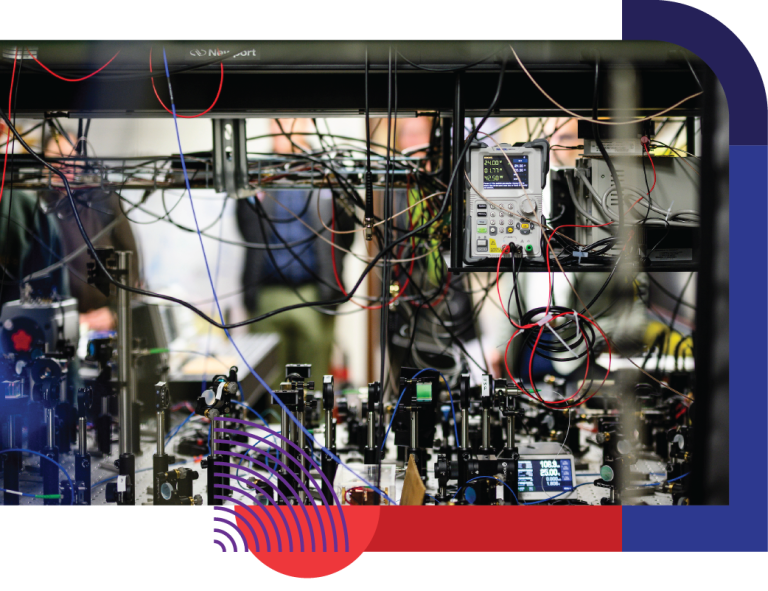
We’re developing quantum technologies that integrate with existing platforms—making them scalable, energy-efficient, and manufacturable. Our research spans silicon-based qubits, superconducting circuits, and quantum control systems, all built using materials and fabrication techniques that support broad compatibility and reproducibility.
By leveraging established infrastructure and fabrication methods, we aim to accelerate quantum system development while reducing barriers to implementation. Our team explores both fundamental quantum science and applied engineering, with a focus on coherence, integration, and hybrid architectures that combine quantum and classical components.
This approach enables new capabilities in precision measurement, secure communication, and advanced computation—while remaining grounded in practical design principles that support scalability and real-world deployment.
Research Faculty and Staff

Jennifer Choy
Position title: Associate Professor
Electrical & Computer Engineering
- Quantum engineering
- Atomic and optical physics
- Nanophotonics
- Development and characterization of solid-state defects
- Quantum sensing using atoms and defects in solids
- Inertial navigation and timekeeping
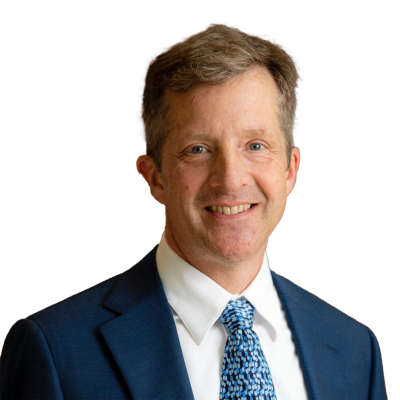
Mark Eriksson
Position title: John Bardeen and Steenbock Professor
- Quantum Computation and Quantum Bits (Qubits)
- Si/SiGe Quantum Dot Spin and Hybrid Qubits
- Nanoscience
- Carbon Nanotubes and Graphene
- Semiconductor Nanomembranes
- Thermoelectric Materials
- Semiconductor Nanostructures
- Scanning Probe Microscopy (AFM, EFM, Scanned Gate)

Mark Friesen
Position title: Distinguished Scientist
- Quantum computing
- Semiconductor physics
- Device modeling

Padma Gopalan
Position title: Associate Chair of Graduate Studies
Materials Science & Engineering
- Polymer Synthesis and Characterization
- Electro-optic and Photonic Materials
- Self-assembly of Block Copolymers
- Photonic Devices
- Liquid Crystalline Polymers

Roman Kuzmin
Position title: Dunson Cheng Assistant Professor of Physics
- High-impedance superconducting circuits
- Analog quantum simulation & computing
- Josephson junction arrays for many-body physics
- Quantum phase transitions & impurity models
- Qubit design for metrology and simulation

Robert McDermott
Position title: Roeske Professor of Physics
Physics, Materials Science & Engineering
- Condensed matter: quantum coherence and entanglement of superconducting integrated circuits
- Quantum-limited amplifiers
- Application of SQUIDs to magnetic resonance detection

Matthew Otten
Position title: Assistant Professor
- Quantum information science
- Open quantum systems
- Quantum computing

Britton L. Plourde
Position title: Professor
- Superconducting quantum circuits
- Josephson junction-based qubits
- Quantum computing hardware and scalability
- Quasiparticle dynamics in superconductors
- Noise and decoherence in quantum systems
- Quantum sensing and detection (e.g., dark matter)
- Microfabrication of superconducting devices
- Applied quantum technologies in startup environments

Swamit Tannu
Position title: Assistant Professor
Computer Sciences, Electrical and Computer Engineering
- Quantum/classical systems architecture
- Fault-tolerant quantum computing
- Secure, scalable, programmable quantum tools
- Quantum error correction + compiler + hardware
- ML for quantum readout and simulation
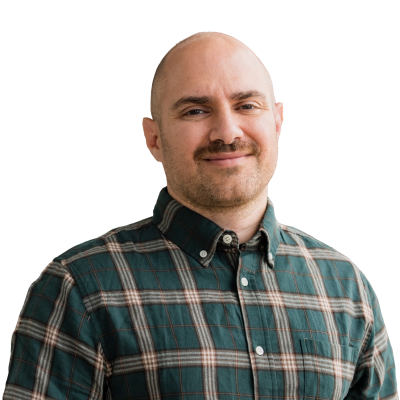
George Tzimpragos
Position title: James E. Smith Assistant Professor
Electrical & Computer Engineering
- Computer architecture
- Computing with novel technologies
- Brain-inspired computing

Maxim G. Vavilov
Position title: Professor, Associate Chair for Undergraduate Program and Academic Affairs
- Theoretical condensed matter physics
- Quantum transport & non-equilibrium systems
- Disorder, chaos, and many-body quantum dynamics
- Superconducting qubits and gate development
- Quasiparticle effects in mesoscopic devices

Jennifer Volk
Position title: John D. Wiley Assistant Professor
Electrical & Computer Engineering
- Superconducting logic
- Bio-based architectures
- Novel computing mediums

Paul Voyles
Position title: Harvey D. Spangler Professor
Materials Science & Engineering
- Electron microscopy, including aberration-corrected Z-contrast STEM, microanalysis by EDS and EELS, and coherent electron nanodiffraction
- Growth, structure, and defects in functional materials, including spintronics, oxide interfaces, and nanostructures
- Nanoscale order in glassy materials

Benjamin Woods
Position title: Assistant Professor
- Spin qubits in semiconductor quantum dots
- Semiconductor-superconductor hybrids
- Topological superconductivity
- Hamiltonian engineering
Latest News

Wisconsin CHIPS joins SWAP Hub & ME Commons
Wisconsin CHIPS is pleased to announce its new membership to the Southwest Advanced Prototyping (SWAP) Hub led by Arizona State University. The SWAP Hub is one of eight that makes up the Microelectronics (ME) Commons, which was established to position the United States as a global leader in microelectronics research and enable domestic fabrication.
Kawasaki named a Moore Foundation Experimental Physics Investigator
Jason Kawasaki, an associate professor in materials science and engineering at the University of Wisconsin-Madison, has been named a 2025 Gordon and Betty Moore Foundation Experimental Physics Investigator. Selection to the program is a prestigious honor …

2025 Nobel Prize Laureate John Martinis’s Connections to UW–Madison
Wisconsin CHIPS congratulates the 2025 laureates of The Nobel Prize in Physics—John Clarke, Michel H. Devoret, and John M. Martinis—for observation of quantum-mechanical tunneling in an electrical circuit based on superconductors! Excitingly, Martinis has connections to UW–Madison through shared research and his co-founded company Qolab.
- More News