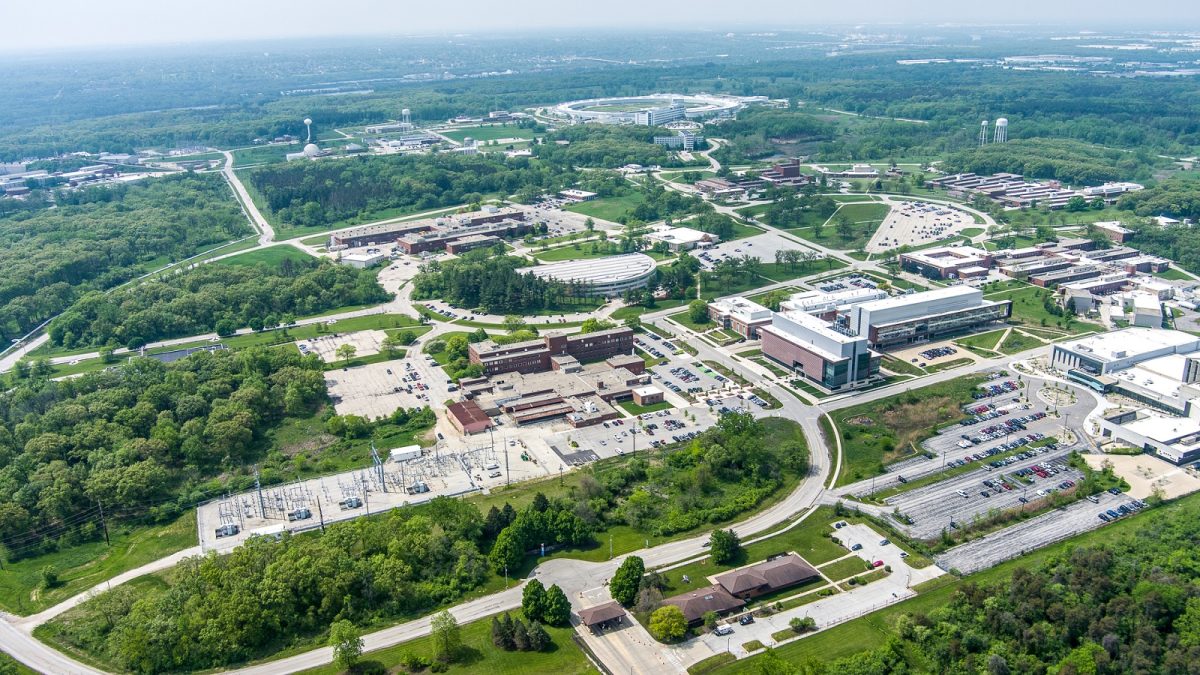
Argonne National Laboratory, or ANL, is a U.S. Department of Energy (DoE) lab that seeks to power large-scale energy innovation. Founded in 1946, it was the first national lab in the United States and hosts a range of unique facilities and equipment.
Argonne works with universities, industry, and other national laboratories in a wide range of scientific areas—many of which, such as physics, materials science, quantum science, and computer science, contribute to the semiconductor research of Wisconsin CHIPS. And at just a two-hour drive from UW–Madison, Argonne is part of the Midwest manufacturing systems that CHIPS seeks to support.
Participation in Research Centers
Although UW–Madison and Argonne established a formal partnership since 2018, both institutions have built a portfolio of shared research and mobilized complementary development and manufacturing expertise for decades. Semiconductor researchers from all interest areas have benefited from this affiliation.
One way Argonne provides opportunities for academic collaboration is through research area centers. For example, CHIPS researchers—including Victor Brar, Jennifer Choy, Mark Eriksson, Randall Goldsmith, Mikhail Kats, and Robert McDermott—are part of Q-NEXT, a $125m center for quantum information science led by Argonne. It connects UW and Argonne staff, funds projects, and creates a national network of labs, universities, companies, and foundries all advancing quantum technologies.
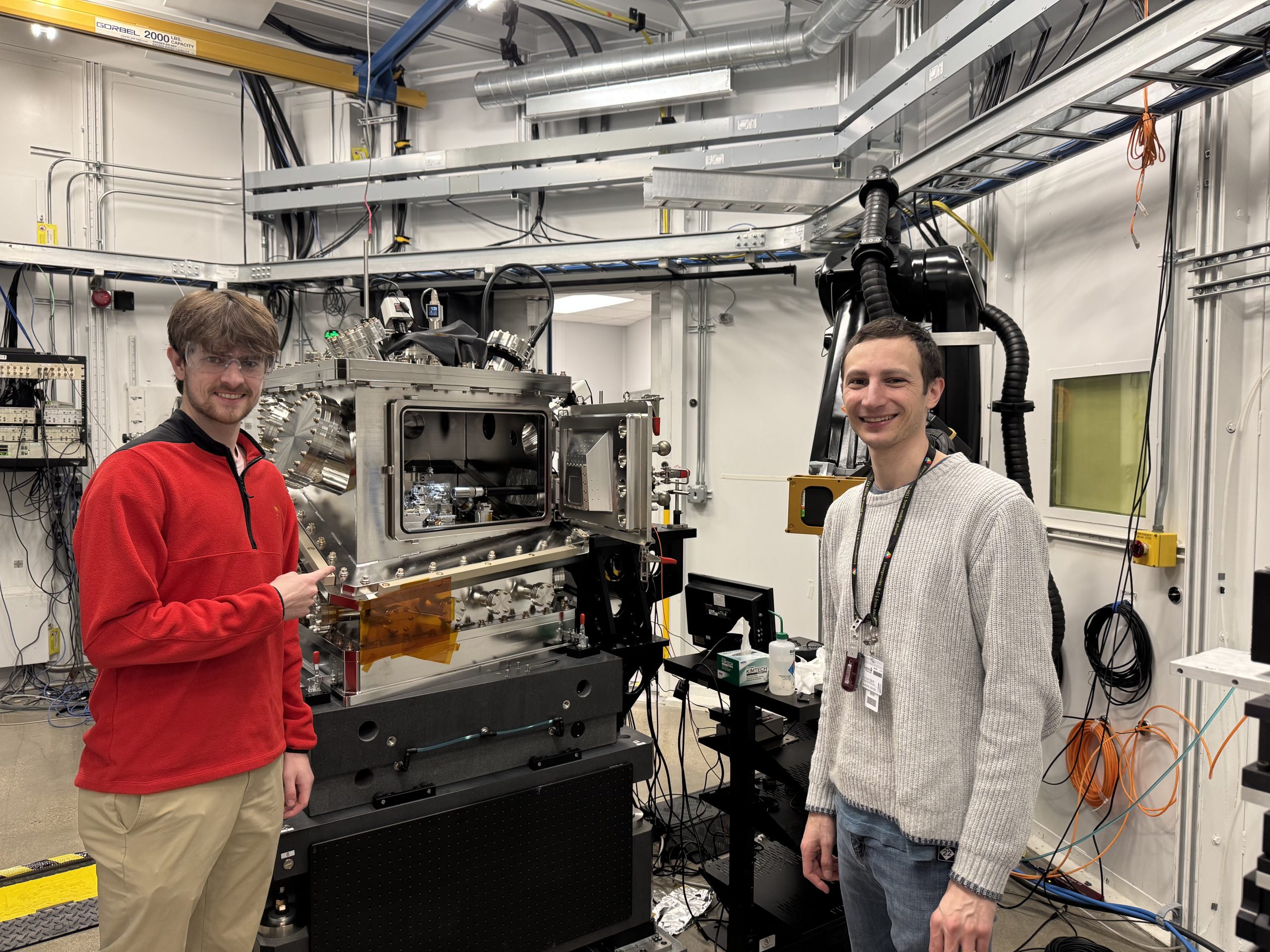
Physics professor Mark Eriksson, for example, is the Q-NEXT Materials & Integration thrust area lead, which focuses on quantum coherence and qubits and quantum devices. Jennifer Choy, associate professor of Electrical & Computer Engineering, is developing semiconductor-based quantum sensors that can supplement GPS in autonomous vehicles or remote environments. She collaborates with Q-NEXT scientists Nazar Delegan and F. Joseph Heremans on characterizations and applications of high-quality diamond with spin defects, which are being grown at Argonne. Chemistry professor Randall Goldsmith uses photonic nanodevices for single-molecule spectroscopy, or performing measurements on individual molecules, important for bringing quantum sensors to applications in chemistry and biology. Q-NEXT exists because of the strong overlapping semiconductor and quantum ecosystems in the Midwest.
Employing User Facilities
National labs like Argonne have a wealth of equipment and scientific personnel that are important resources for CHIPS researchers. Accessing Argonne’s facilities allows CHIPS researchers to perform advanced testing at centralized, federally funded facilities.
CHIPS researchers often utilize the Center for Nanoscale Materials (CNM) for synthesis, fabrication, characterization, and theoretical modeling. In addition to routine usage, Argonne’s CNM became an indispensable resource when the UW–Madison Nanoscale Fabrication Center flooded in 2023. Victor Brar, Jennifer Choy, Adrien Couet, Randall Goldsmith, Chirag Gupta, Mikhail Kats, Ying Wang, and Filiz Yesilkoy all sent students to Argonne during this period.
Jennifer Choy works with CNM scientists Alan Dibos and David Czaplewski on a silicon metasurface to enable polarimetry in atomic magnetometers. This research aims to develop portable quantum sensors, which could enable advancements in medical imaging and navigation. Argonne was instrumental in developing and executing the sample fabrication for this work.
Electrical & Computer Engineering professor Mikhail Kats has used CNM facilities for both nanofabrication and ultrafast spectroscopy, and he currently serves on the CNM User Executive Committee, which helps support the center. His group collaborates extensively with David Czaplewski, with recent results including building optical interfaces to quantum centers in diamond and converting low-intensity infrared light into the visible for night vision. As an investigator with Q-NEXT, Kats helps develop optical components for quantum repeaters.
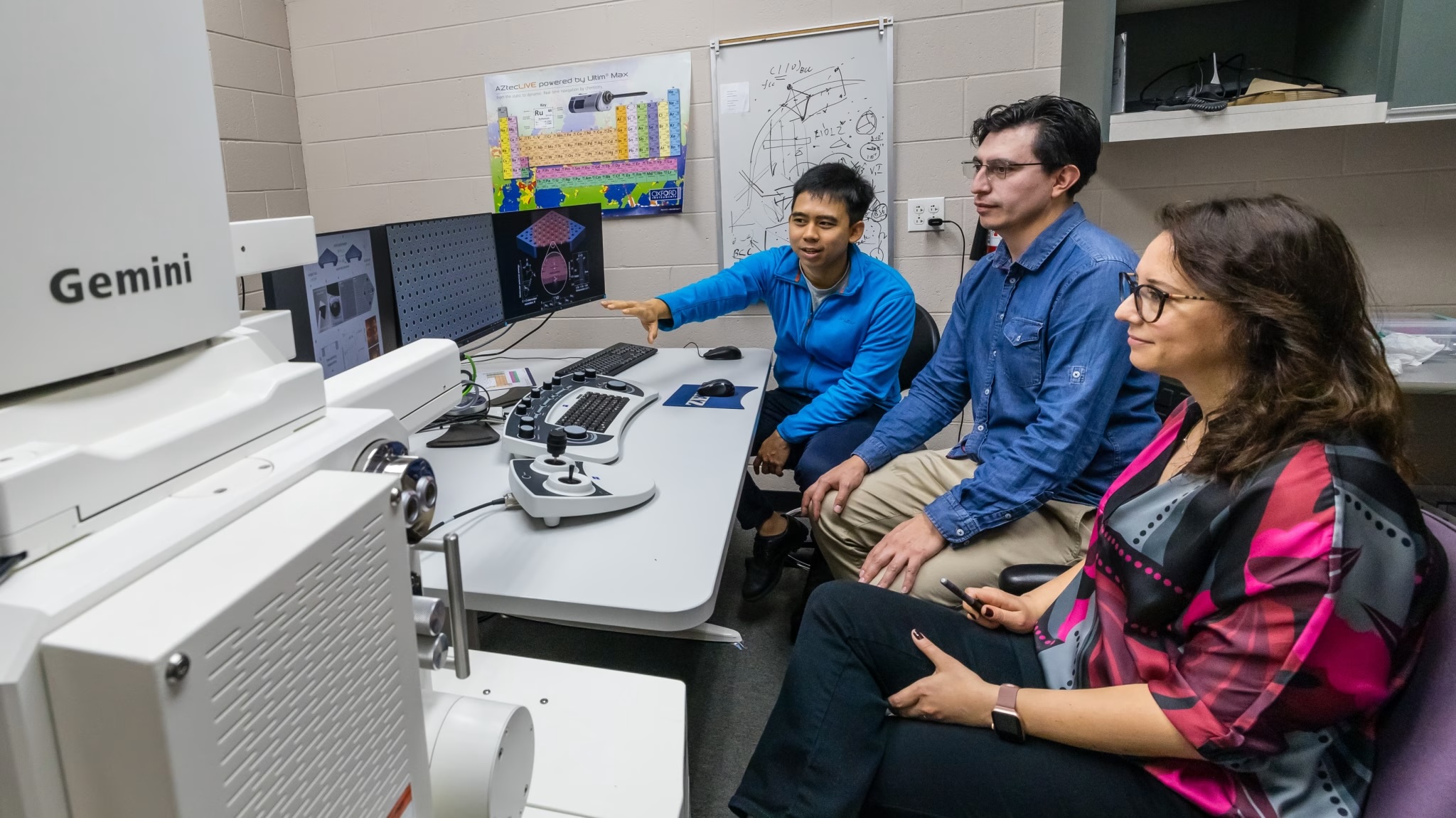
Materials Science & Engineering professor Paul Voyles uses the CNM facilities and collaborates directly with Argonne scientist Maria Chan on understanding the complex atomic structure of superconducting qubit devices. This research pursues functional improvements of quantum computers by reducing sources of decoherence.
Filiz Yesilkoy, assistant professor of Biomedical Engineering, also works with David Czaplewski to develop silicon nanophotonic devices for biochemical sensing and imaging applications. The group regularly utilizes the CNM’s nanofabrication facility to fabricate sensor chips, which are then optically characterized at their lab and employed for molecular analysis of biological samples. The overarching goal is to introduce accessible and sensitive diagnostic tools that can enhance human health and well-being.
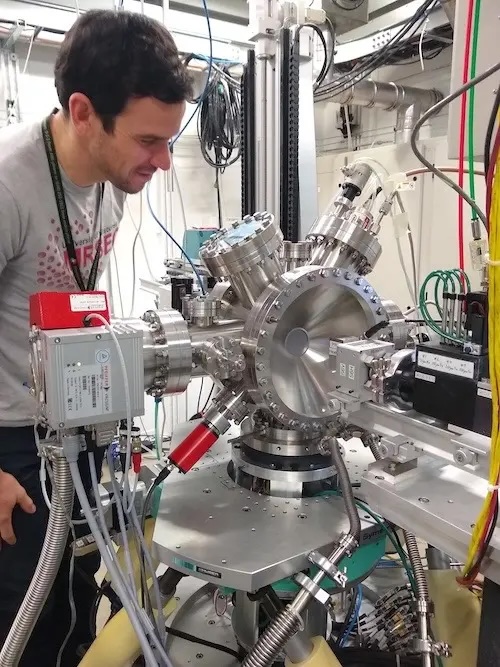
CHIPS researchers also take full advantage of Argonne’s Advanced Photon Source (APS), a globally important X-ray light source that serves a large user community. Materials Science & Engineering professor Paul Evans uses the APS for X-ray coherence and nanobeam techniques, collaborating on an instrument developed as part of the UW–Madison Materials Research Science and Engineering Center (MRSEC) that is designed for in-situ studies of oxide and 2D electronic material synthesis. This research reveals fundamental electronic and electromechanical processes underpinning the integration of a new generation of materials that can improve the performance in electronic and optoelectronic devices.
Whitney Loo, assistant professor of Chemical & Biological Engineering, is working on the upgraded version of the APS (APS-U) that pushes the boundaries of X-ray science. Ying Wang, assistant professor of Electrical & Computer Engineering, has an ongoing collaboration on the APS to improve the performance and reliability of nanodevice memory technology. Her team conducts measurements—such as X-ray diffraction/mapping—to correlate domain configuration, interfacial chemistry, and local potential landscapes with device‐level metrics.
The Materials Engineering Research Facility (MERF) at Argonne provides testing and scaling capabilities for experimental materials and chemicals beneficial to CHIPS researchers. Sangkee Min, associate professor of Mechanical Engineering, used the MERF to improve the productivity and quality consistency of lithium-ion batteries for large-scale manufacturing. By revealing how charge-discharge swelling drives mechanical wear that shortens battery life, this collaboration guides the design of tougher lithium batteries that improves the performance and reliability of modern electronics.
Joint Research with Argonne Scientists
Collaboration on semiconductors with Argonne has only strengthened in the last five years. Joint ventures between CHIPS researchers and Argonne scientists continue to result in breakthroughs.
Materials Science & Engineering professor Jason Kawasaki’s work on controlling and exploiting the electronic, magnetic, and elastic properties of semiconductor materials connects him to multiple Argonne scientists. Jessica McChesney, for example, collaborates on Angle-resolved Photoemission Spectroscopy (ARPES) at the APS facility, and John Freeland, Yongseong Choi, Joerg Strempfer, and Daniel Haskel collaborate on X-ray measurement techniques.
Robert Jacobberger, assistant professor of Electrical & Computer Engineering, is set to begin a new project with Argonne Nanofabrication and Devices Group Leader Anirudha V. Sumant. The team aims to develop a commercially viable approach to producing diamond films for next-generation electronic and quantum technologies. Jacobberger will leverage a new template developed in his UW–Madison lab with Argonne’s state-of-the-art reactors and Sumant’s over 30 years of experience on diamond growth. This research stands to significantly improve electronic performance in renewable energy systems, electric vehicles, telecommunications, military surveillance, and navigation.
Physics faculty, including assistant professor Benjamin Woods and Mark Eriksson, work on semiconductor silicon spin qubits with Argonne scientists Mark Friesen and Jonathan Marcks. Their collaboration involves understanding noise and materials properties—Marcks, in collaboration with Eriksson’s experimental group, performs experiments on devices from Intel. Woods, Friesen, and the PhD students they advise provide theoretical modeling and support. This research improves internal functions required for large-scale quantum computing.
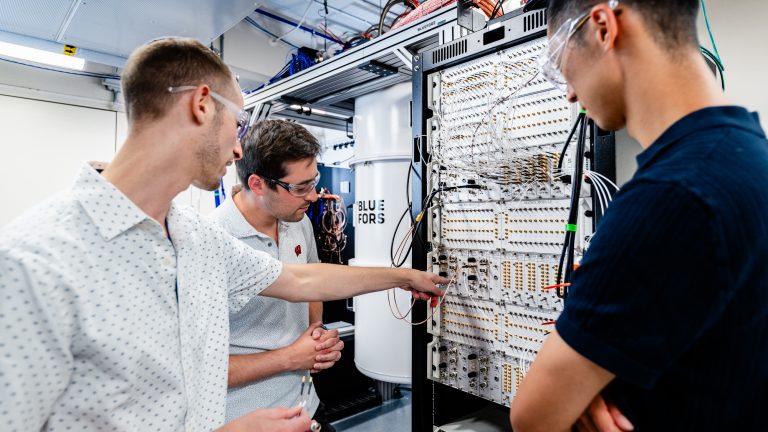
Assistant professor of Materials Science & Engineering Jun Xiao’s group collaborates with Argonne scientists Rui Liu, Haidan Wen, and Thomas Edward Gage. This team pushes the frontiers of 2D ferroelectricity to transform computing and memory technology.
Building the Midwestern Semiconductor Community
These are just some ways in which CHIPS researchers maintain thriving collaborations with Argonne National Lab. In addition to the consistent flow of research knowledge between the two institutions, the partnership creates pathways of qualified students from academia into semiconductor industries. Badger engineers emerge trained and capable of leading the next generation of innovation, which then expands Argonne’s staff and affiliate ecosystem.
Andrew Jansen (BS, 1987), for example, is a group leader investigating cell chemistry and hardware development in lithium-based batteries for transportation applications. Physicist Jessica L. McChesney (PhD, 2004) uses x-ray techniques to study the electronic properties of quantum transport materials for nanoelectronics and energy storage. Youngjun Ahn (PhD, 2020), Thomas Edward Gage (BS, 2013), Barry Lai (PhD, 1990), and David Sehloff (PhD, 2021) are other notable UW–Madison graduates working on semiconductor-related science at Argonne.
The longstanding, mutually beneficial partnership between UW–Madison and Argonne is critical to highlight, because it ensures the future of semiconductor advancement, workforce development, and domestic manufacturing.
• • •
Featured image: Aerial view of Argonne National Lab in Lemont, Illinois. Photo by ANL.
Author: Bri Meyer, UW–Madison Research Impact and Outreach Communications Specialist