Three Madison instructors are collaborating to steward a new type of engineering workforce development for Wisconsin. Grant Emmel (Madison College) joins Wisconsin CHIPS faculty Hantang Qin and Mikhail Kats (UW–Madison) in fostering cross-institutional programming that will benefit burgeoning industries like semiconductors and quantum computing.
While UW–Madison drives advancements in science, technology, and engineering education, Madison College specializes in workforce development through technician training. Emmel described these complementary objectives as “two sides of the same Wisconsin coin”—and although there is only a small gap between two sides of a coin, the gap nonetheless remains. Emmel, Qin, and CHIPS Associate Director Kats hope to close this gap between the generation of new knowledge and the training of a technical workforce, with practical steps that make a big impact.
In engineering, “workforce development” has different meanings to people throughout academia and industry. Recently, for example, federal funding agencies like the NSF have placed a priority on nationwide workforce development in engineering. Directives on how to put this into action, however, have been vague—particularly when a workforce effort is part of a research grant. The few-year timelines for federal research grants do not align with the time it takes to create thoughtful workforce training, so those programs often get deprioritized.
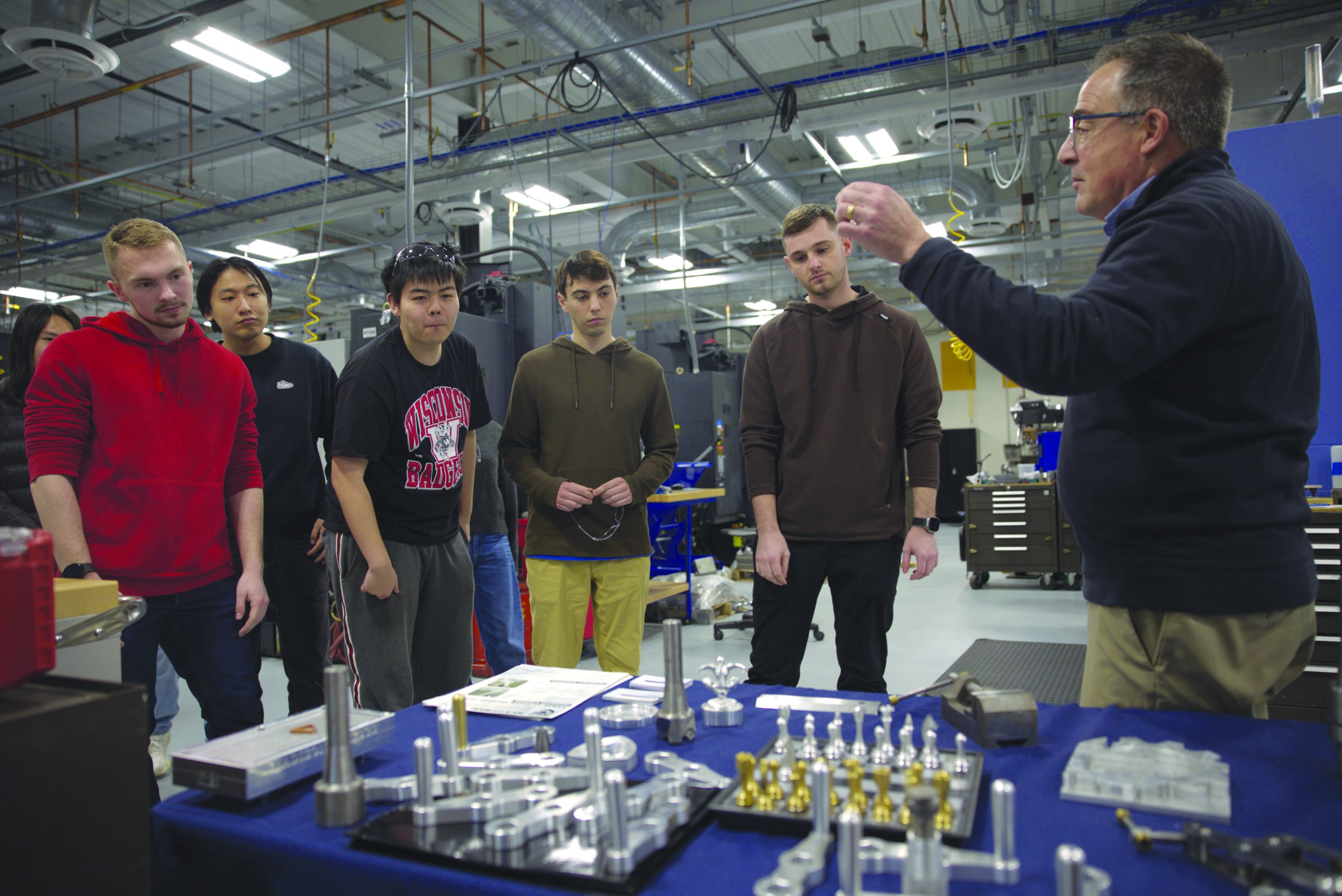
Workforce development also involves scaled levels of preparedness for engineers, engineering technicians, and technicians. Training of engineers typically prioritizes classroom theoretical and methodological education from a university, preparing them to set direction and strategy. Technicians receive applied training with equipment and manufacturing skills, preparing them to work directly on the floor. Engineering technicians bridge these two, often receiving technical training as well as education in theory and methods. A healthy ecosystem requires a trained supply of workers from all three levels.
The road to substantive collaboration on workforce development between universities and technical colleges requires a dedicated partnership. Qin, the AI-aided Manufacturing thrust leader for Wisconsin CHIPS, came together with Emmel to lead a soldering “bootcamp” workshop for students in Qin’s ISyE 512 course on inspection, quality control, and reliability. In the UW classroom, these students build expertise in statistics, data science, and quality engineering methodologies, with less focus on hands-on manufacturing skills for products like circuit boards.
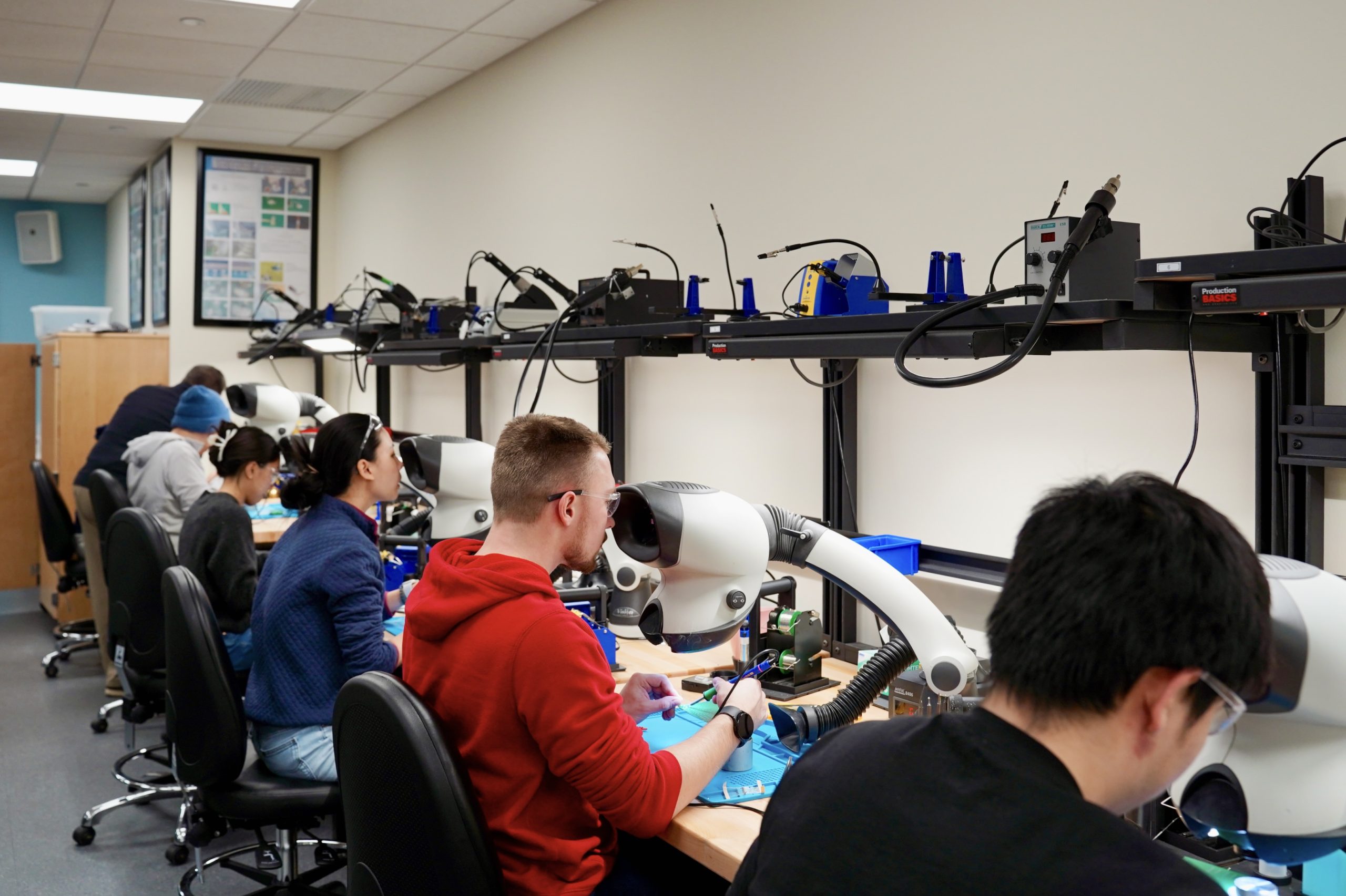
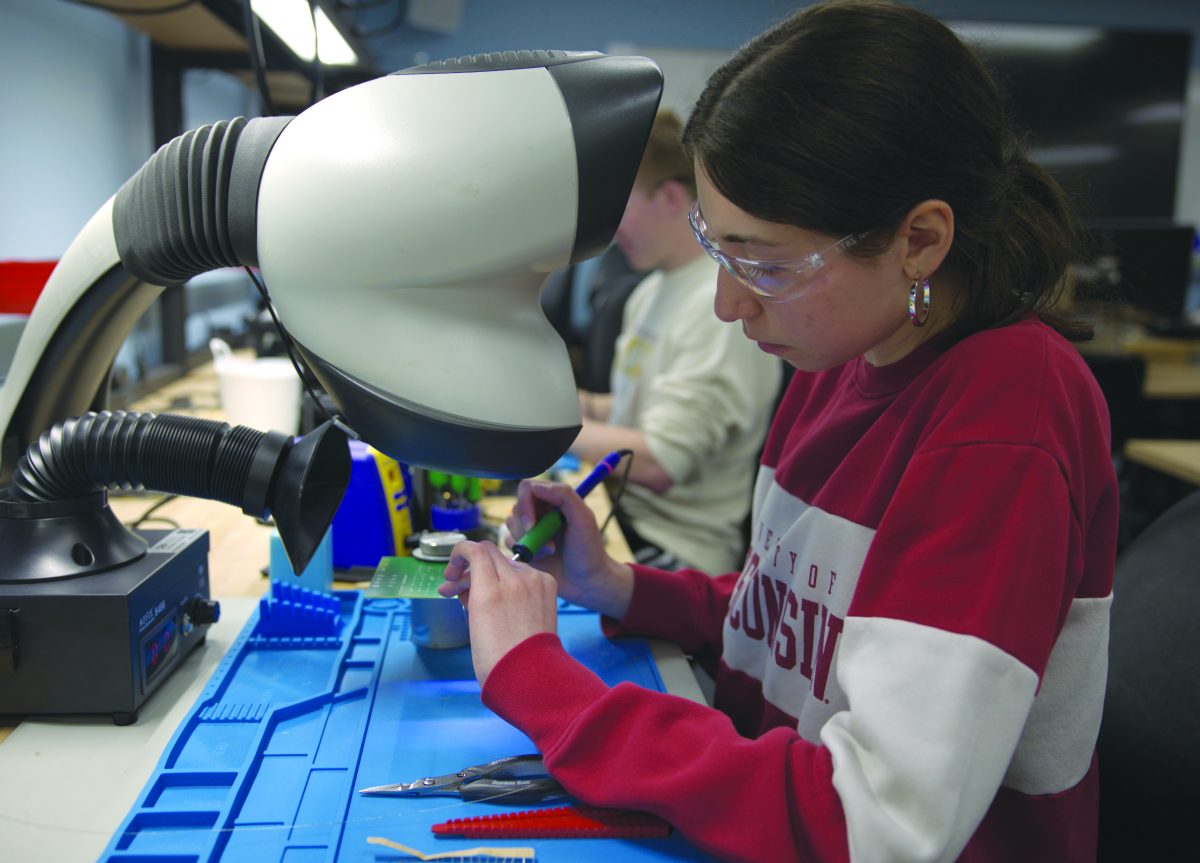
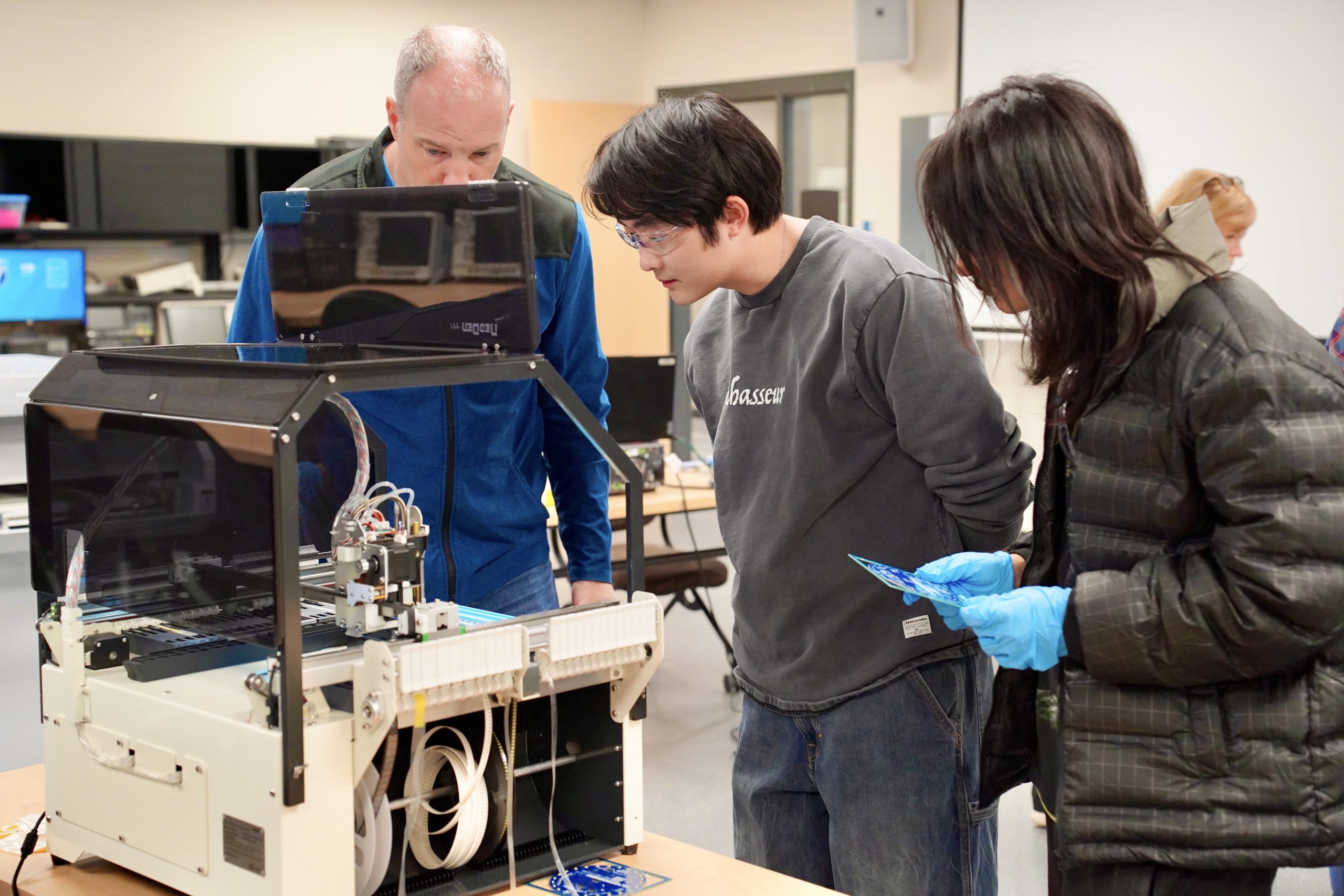
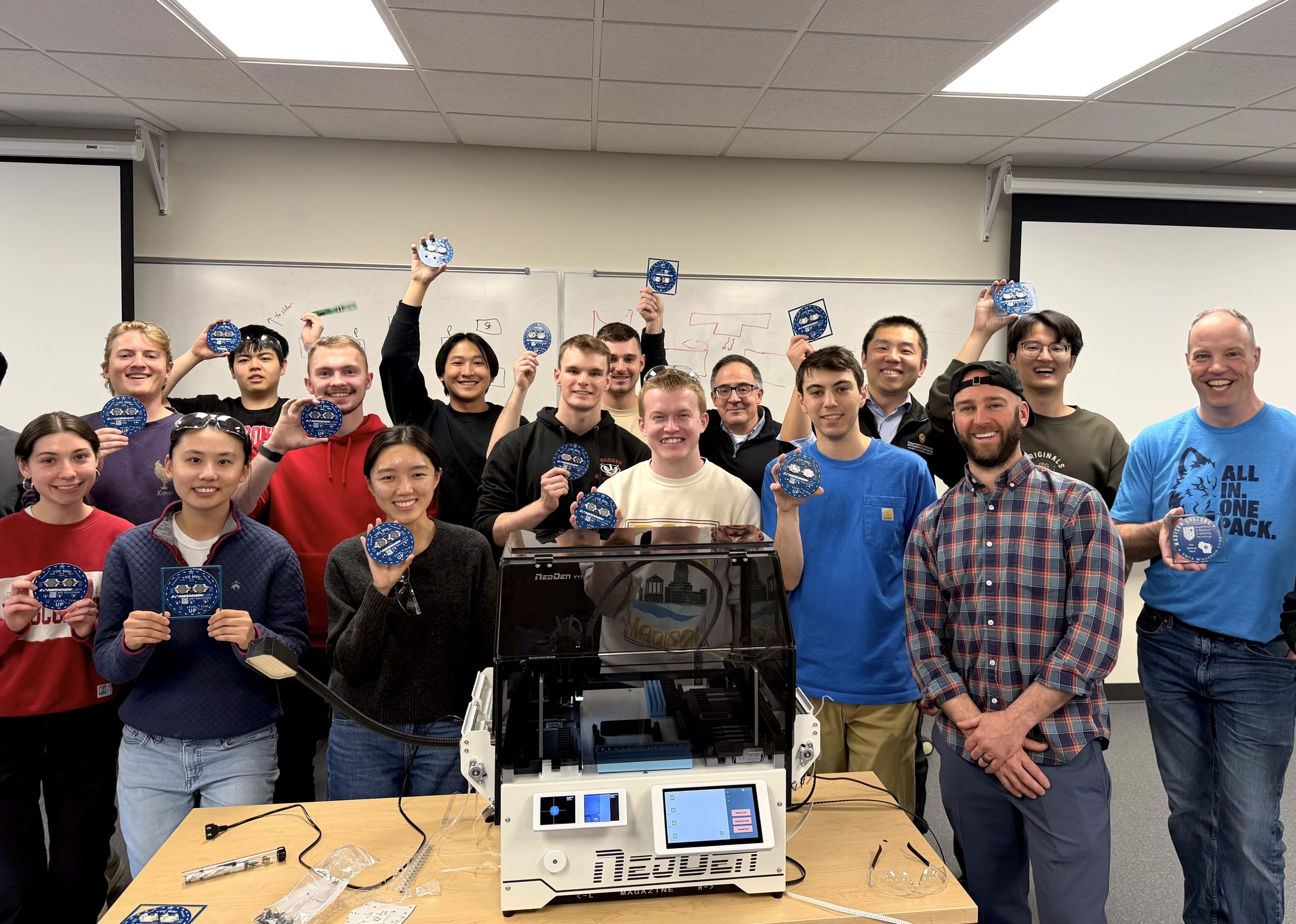
The bootcamp became a reality in March and focused on printed circuit board (PCB) assembly. Thirteen UW–Madison students visited the Madison College Truax Campus to attend a lecture from Madison College’s 8-week technician course Introduction to Printed Circuit Board Assembly. After lunch, they practiced soldering at individual assembly stations. They learned the entire production cycle of a circuit board, supporting their coursework on engineering concepts and quality control. As Emmel said, “The best engineers are also good technicians.”
This bootcamp workshop introduces the idea of “reverse transfer” for partnering institutions. The “standard” understanding of transfer involves progressing from technical college to university education—for example, Madison College’s Electrical Engineering Technology transfer program designed to send students to universities like UW–Madison, UW–Platteville, and Milwaukee School Of Engineering. “Reverse transfer” instead gives university engineering students experience with hands-on technician skills taught at technical colleges.
Qin and Emmel believe that skill and education transfers should go in both directions. Madison College has the PCB setups to provide workshop-style training experiences to large groups of students. Qin was glad to see his students engaged throughout the day, and producing functional circuit boards from beginning to end.
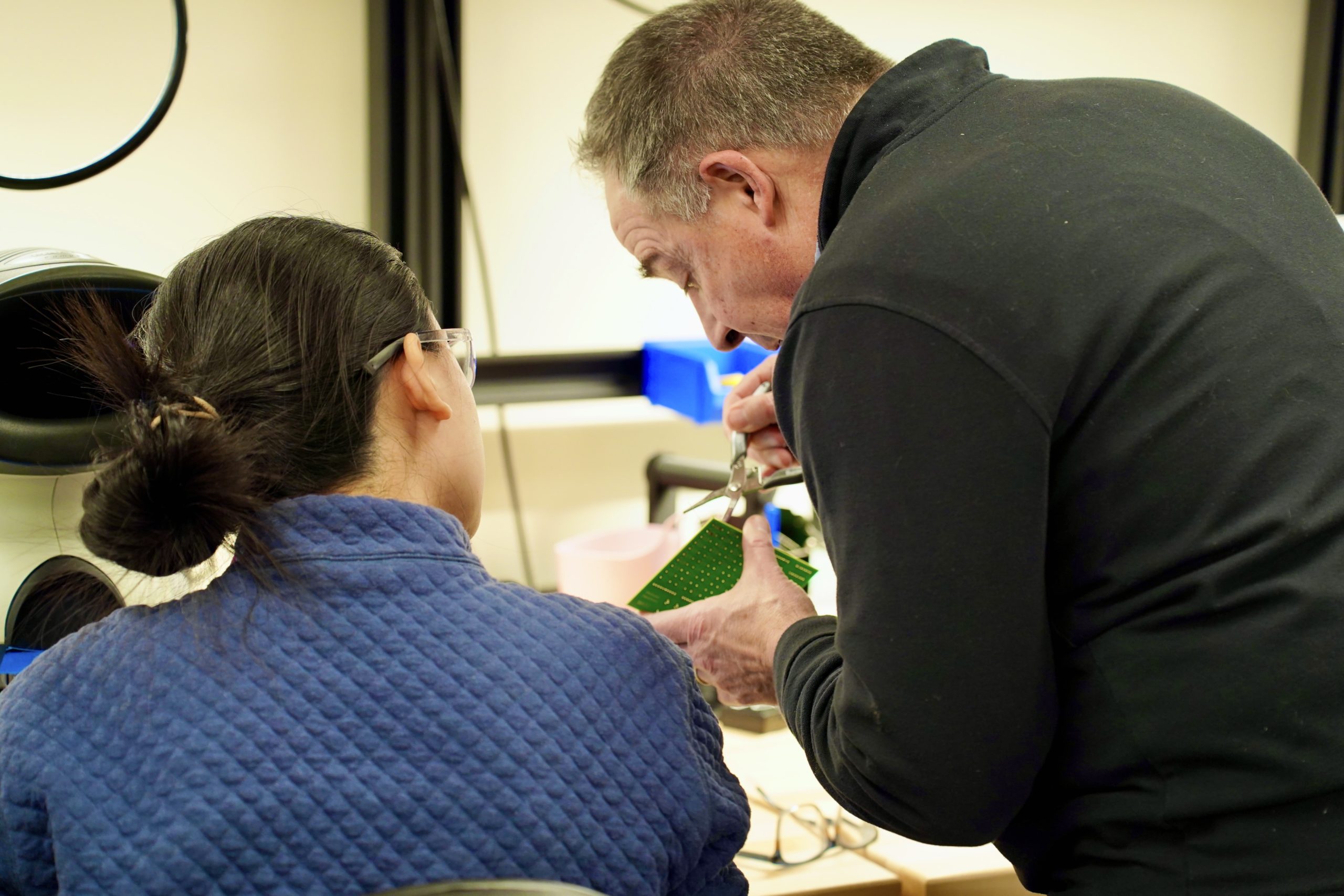
After the event, Qin said that this bootcamp was a perfect way to take a real step after many discussions about potential cooperation between Madison College and UW–Madison. “We decided to make a move. This is a win-win situation, and we hope this can create a future working mechanism to generate impacts for workforce development,” Qin said.
Emmel agreed. “There are so many positive aspects of us working together. This was a straightforward event. We loved having the students here. What matters is that we did something. And that will lead to the next thing, and the next thing.”
There was also plenty of fun to be had that comes with a change of scenery. Near the end of the day, one of Qin’s students challenged him to a soldering contest. “My background is actually in electrical engineering,” Qin said. “I haven’t worked on soldering for over 12 years—but I still think I beat him.”
Qin also conducted a student survey that quantified the benefits of the workshop. Before the workshop, students recorded a 4 out of 5 interest in hands-on training but claimed only a 2 out of 5 experience level. After the workshop, more than 40 percent of students increased their confidence rating for quality and manufacturing engineering to 5 out of 5. Their satisfaction rate for the entire experience was nearly unanimous at 100 percent. His students are now using data they collected during training to complete their end-of-term projects.
Kats and Emmel view this workshop as an example of hands-on skills development that cannot be replicated by sitting in a classroom or watching training videos. Wisconsin’s engineering and manufacturing firms depend on Madison College and UW–Madison for training and workforce development. As conversations around computational tools and AI loom, a connection to physical manufacturing processes provides students with a critical advantage. Establishing a working process for both the engineer-to-technician and technician-to-engineer transfer options to students builds on the state’s manufacturing success and keeps the entire Wisconsin ecosystem moving.
“We are at a point where we need more hands-on training for students at all levels,” Kats said. “The workshop is an important step. We plan to build on that momentum.”
Emmel, Qin, and Kats hope that the workshop serves as a blueprint toward creating a highly trained, competent engineering workforce across disciplines.
“How do you move forward? That’s the Wisconsin motto, so that’s what we’re trying to do. Microelectronics technology is one industry, but the same needs apply to fusion, quantum, and biotech. We’re trying to lay down a process that can be applied across many emerging technologies and allows for constructive conversations with administration,” Emmel said.
Looking toward the future, Qin hopes to receive more federal funding to continue growing the “reverse transfer” experience for his UW students, and Emmel is looking forward to hosting. Together, Madison College and UW–Madison can reshape Wisconsin’s engineering and technician workforce development landscape, one bootcamp at a time.
• • •
Grant Emmel is an Electronics & Electrical Engineering Technology Faculty Instructor at Madison Area Technical College; at UW–Madison, Hantang Qin is an Assistant Professor in the Department of Industrial & Systems Engineering and associated with the Department of Electrical & Computer Engineering, and Mikhail Kats is the Jack St. Clair Kilby and Antoine-Bascom Professor in the Department of Electrical & Computer Engineering.
Featured image: A UW–Madison “reverse transfer” student practices her soldering at the bootcamp in March 2026. Photo by Jennifer Fetterly, Madison College Communications Specialist.
Author: Bri Meyer, Research Impact and Outreach Communications Specialist